Herpetology Research Lab
When, How, and Why do Snakes Move?
Movement is often the primary tool used by animals to acquire critical resources and avoid deleterious interactions with predators or competitors. Documenting animal movement through space and time is, therefore, a critical first step in understanding the ecological and evolutionary mechanisms shaping these behavioral strategies. However, monitoring movement at the scales required to investigate these relationships has been exceedingly difficult or impossible for many animal taxa due to constraints of body size, terrain, and laborious field data collection techniques. We have validated the remote and continuous recording of movement behavior in small, secretive animals via the internal implantation of coupled radio transmitter-accelerometer dataloggers. My case studies in this area use large-bodied pitvipers (Crotalinae) as model organisms. As secretive and cryptic ambush predators with nocturnal habits, pitvipers are ideal candidates for accelerometer studies of movement behavior. Combined with supervised and unsupervised model classification techniques, this framework allows detailed documentation of "when" and "how" snakes move over different time scales and improves the testing of "why" various patterns are observed.
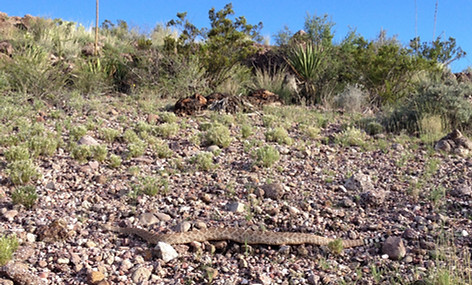
Crotalus atrox, Indio Mountains Research Station (IMRS), Hudspeth Co., TX

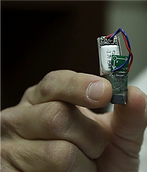

Radio Telemetry (left), Tri-axial Accelerometer in hand and field data collection (right)
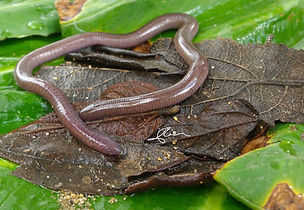
Dermophis oaxacae
Oaxaca, Mexico
Charadrahyla altipotens
Oaxaca, Mexico
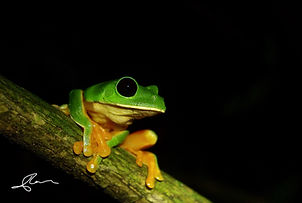
Agalychnis moreletii
Oaxaca, Mexico


Mesoamerican Conservation Series (MCS)
Of the 25 global biodiversity hotspots identified by Meyers (2000), the majority of Mesoamerica (Mexico and Central America) is considered one of these critical regions. I have been fortunate to recently participate as a collaborator in an ongoing series of publications under the Mesoamerican Conservation Series. The primary goal of these papers is to provide a contemporary reassessment of the conservation status of the entire herpetofauna within specific regions in Mesoamerica (such as Mexican states) using a suite of conservation status measures. Further, we broadly discuss various threats to herpetofaunal persistence in these areas while making general recommendations to aid future conservation efforts.
With a core group of colleagues from MCS, I also participate in annual field expeditions to Oaxaca, Mexico. Over the course of several survey trips to the state, we have launched a long-term stream-breeding anuran monitoring project, contributed numerous geographic distribution extensions, and reported several species rediscoveries. Furthermore, we have collected and cataloged over 400 research specimens. Our efforts resulted in an invited chapter in the book: "Ecology and Wildlife Conservation in Anthropized Environments," published by CONACYT-REFAMA.
Plectrohyla hazalae, Oaxaca, Mexico
Spatial Ecology of Chihuahuan Desert Snakes
Movement and space-use strategies are simultaneously influenced by a complex blend of intrinsic and extrinsic factors. Using radio telemetry protocols and statistical models for these data, I attempt to relate environmental conditions with variation in movement and space use patterns among individuals. To date, my studies in this area have focussed on several Chihuahuan Desert snake species. As highly cryptic and secretive organisms, snakes are excellent model systems for radio telemetry and other animal-borne monitoring technologies. Additionally, radio telemetry also serves as a valuable exploratory tool for ecological investigations of poorly studied or uncommon species, allowing detailed collection of information on natural history and ecology that is lacking for many snakes.
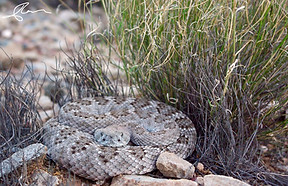
C. atrox, IMRS, Hudspeth Co., Texas
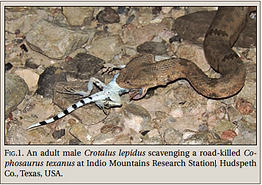
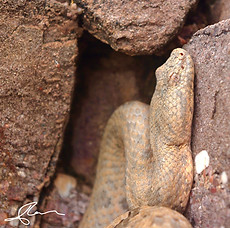
Crotalus lepidus (above), C. ornatus (below) IMRS, Hudspeth
Co., Texas

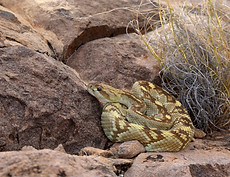
Lampropeltis alterna, IMRS, Hudspeth Co., Texas
Predator-Prey Interactions
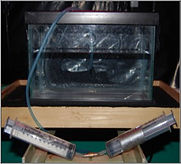
Predation is an important selective force in ecological communities. For amphibians, specifically, introduced predators are considered one of the leading forces contributing to population declines globally. Understanding how species of conservation concern respond to native and non-native predators can, therefore, be critical for informing management strategies. My work in this area used captive experiments to explore the roles of innate and learned predator recognition, predator generalization, and encounter frequencies in anti-predator behavior of the critically endangered Barton Springs Salamander (Eurycea sosorum). Important results from these projects included the documentation of innate recognition of predators, species-specific responses possibly related to risk assessment of predators, the discovery of a previously unconsidered potential predatory threat (Western Mosquitofish, Gambusia affinis), and strong anti-predator behavior in response to an introduced predator (Red Swamp Crayfish, Procambarus clarkii).
Natural History of Herpetofauna
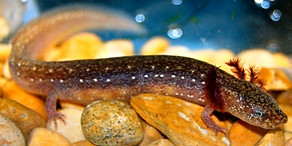
Eurycea sosorum, San Marcos Aquatic Resource Center, San Marcos, Texas
Experimental Testing Chamber
I am broadly interested in the natural history of reptiles and amphibians. I owe much of this interest to some of my research mentors during my undergraduate years, who explained and demonstrated the value of natural history collections. However, with hypothesis-driven research generally being favored over more "descriptive" endeavors, important natural history information is often lacking for many herpetofauna species, especially those that are uncommon, of conservation concern, or found in remote or overlooked regions. This basic information often represents the foundation from which more detailed ecological and evolutionary hypotheses are formulated. Thus, contemporary natural history data collecting efforts remain essential to current and future research.